


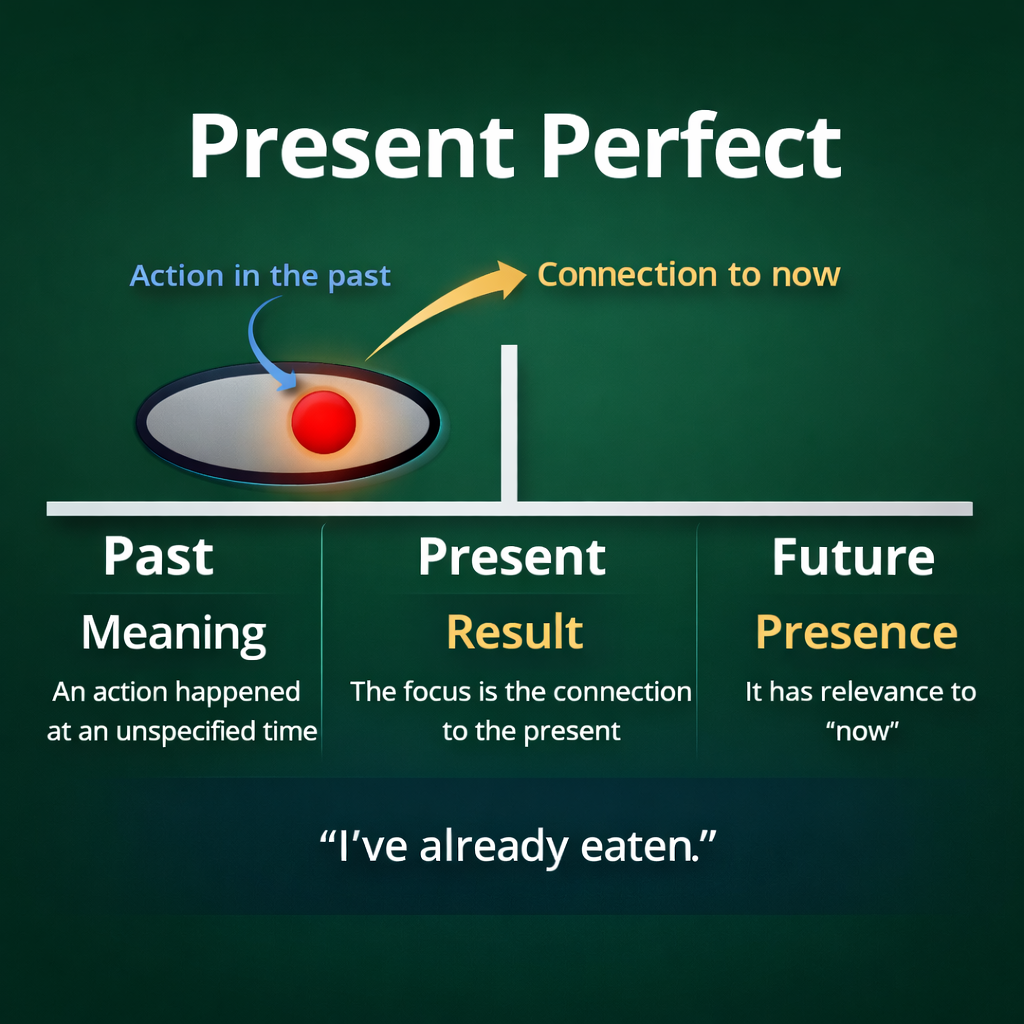

The difference between have been and have gone seems small, but it completely changes meaning in real communication. Many learners know both forms, yet still use the wrong one because they focus on movement instead of result and presence.
This article fits into a wider explanation of how the present perfect links past actions to the current moment, helping learners understand why English chooses one form over the other in real situations.
The Key Question English Cares About
When English chooses between have been and have gone, it is not asking where the person went in the past. Instead, it asks:
Is the person here now or not?
Once you understand this question, the difference becomes logical.
Have Been: The Person Went and Came Back
Have been is used when someone went somewhere and returned. The experience matters, but the person is present now.
Examples:
I have been to Scotland twice.
She has been to that restaurant before.
They have been abroad many times.
In all these sentences, the listener understands that the person is not there now. What matters is the experience.
Have Gone: The Person Went and Is Still There
Have gone is used when someone went somewhere and has not returned yet.
Examples:
She has gone to Scotland.
My parents have gone on holiday.
He has gone to the gym.
At the moment of speaking, the person is not here. The destination explains their absence.
This distinction reflects how the present perfect expresses current reality, not just past movement.
Result and Presence Change the Meaning
Compare these two sentences:
Anna has been to the doctor.
This means Anna went, had the appointment, and came back.
Anna has gone to the doctor.
This means Anna went and is probably still there.
The verb choice tells the listener what is true right now, not simply what happened earlier.
A Very Common Learner Mistake
Learners sometimes say:
I have gone to Scotland.
This sentence only makes sense if the speaker is not present, meaning they are currently in Scotland.
If the speaker is here and talking about experience, the natural sentence is:
I have been to Scotland.
Using have gone while being present creates confusion for the listener.
Have Been with States and Activities
Have been is not used only with places. It is also common with states and activities.
Examples:
I have been married for ten years.
She has been tired all day.
We have been working on this project for weeks.
Here, have been connects a past situation to the present.
This use is explained in more detail in:
📘 Have Been for States and Conditions Explained Clearly
Have Been with Duration
Sometimes have been is used with a place and a time expression.
Example:
She has been in Manchester for two years.
This sentence usually means she went there and is still there now, because the duration describes her current situation.
Context always matters, but time expressions strongly influence interpretation.
British and American English Note
Both British and American English follow the same core logic with have been and have gone. However, expressions around places may differ.
For example:
She has been in hospital.
She has gone to the hospital.
Understanding article use with places helps clarify these structures, as explained in: Be in Hospital vs Be in the Hospital Explained
One Simple Test That Works Every Time
When you are unsure which form to use, ask yourself:
Is the person here now?
If yes, use have been.
If no, use have gone.
Conclusion: Meaning Comes from the Present Result
The difference between have been and have gone is not about memorizing grammar rules. It is about what is true in the present moment.
Once you focus on presence and result, the correct form becomes clear and natural.
This topic is one part of a larger system that explains how the present perfect works with since, for, and duration. To connect this explanation with the complete framework, return to: