

Learning numbers in English is essential for everyday communication. In general, numbers appear in prices, dates, addresses, phone numbers, and many real-life situations. For this reason, understanding how numbers are formed helps learners communicate more clearly and confidently.
In this guide, you will learn:
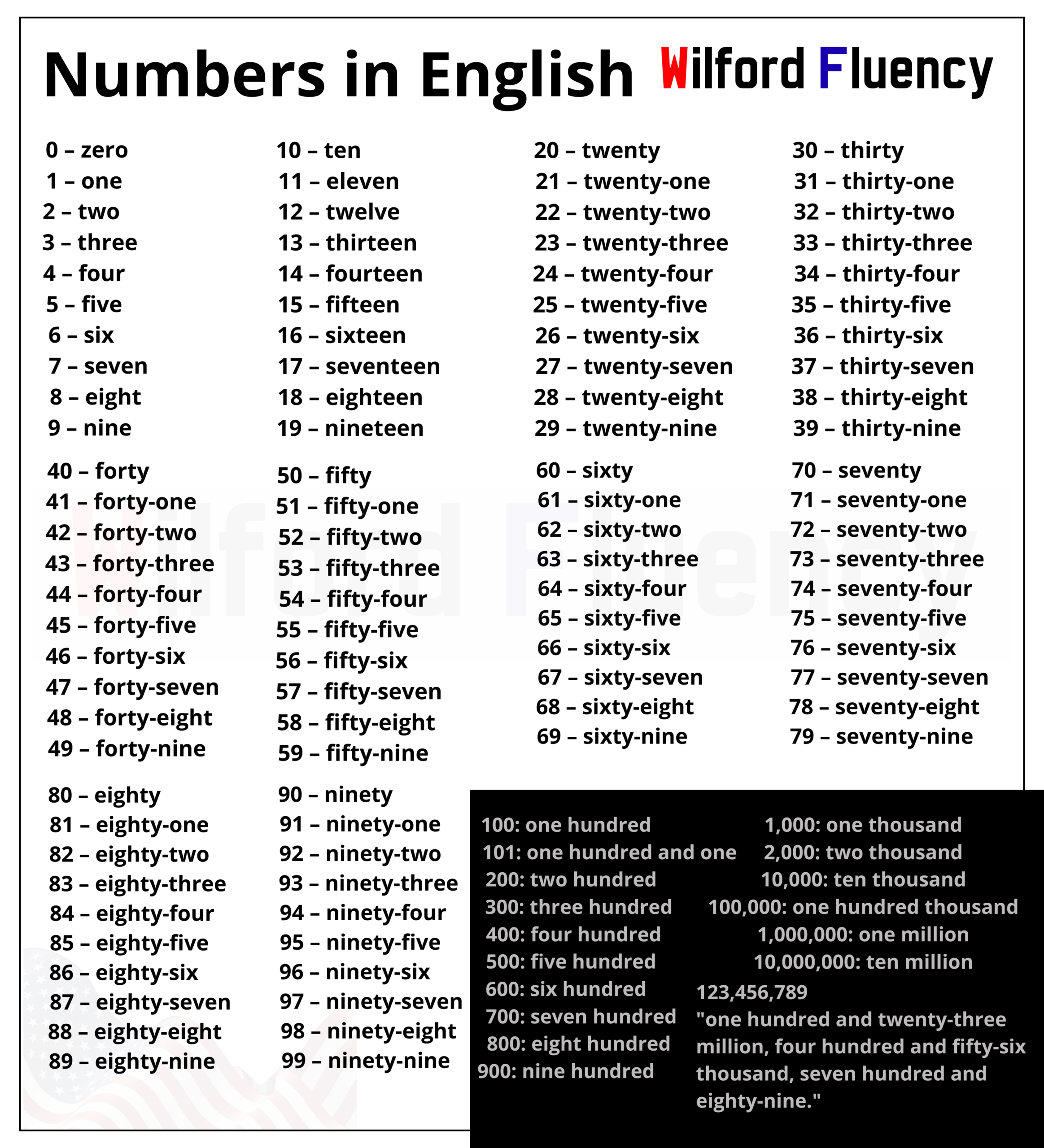
- how to memorize numbers from 1 to 19
- how to build numbers from 20 to 90
- how hundreds work in English
- and, finally, how to say large numbers, including thousands and millions, step by step
Numbers from 1 to 19: Memorization Comes First
First of all, numbers from 1 to 19 must be memorized. Unfortunately, there is no shortcut here. These numbers do not follow a clear pattern, so repetition is essential.
Here they are:
1 – one
2 – two
3 – three
4 – four
5 – five
6 – six
7 – seven
8 – eight
9 – nine
10 – ten
11 – eleven
12 – twelve
13 – thirteen
14 – fourteen
15 – fifteen
16 – sixteen
17 – seventeen
18 – eighteen
19 – nineteen
Once you feel comfortable with these, everything else becomes much easier.
Numbers from 20 to 29: Learning the First Pattern
After memorizing 1 to 19, you can move on to the first logical group.
20 is twenty.
From this point on, you simply combine twenty with numbers from 1 to 9:
- 21 – twenty-one
- 22 – twenty-two
- 23 – twenty-three
- 24 – twenty-four
- 25 – twenty-five
- 26 – twenty-six
- 27 – twenty-seven
- 28 – twenty-eight
- 29 – twenty-nine
So, instead of memorizing many new words, you start reusing what you already know.
Numbers from 30 to 90: Repeating the Same Logic
Next, the same pattern continues. In other words, once you understand one group, you understand them all.
Here are the main tens:
30 – thirty
40 – forty
50 – fifty
60 – sixty
70 – seventy
80 – eighty
90 – ninety
For example:
- 34 → thirty-four
- 47 → forty-seven
- 58 → fifty-eight
- 69 → sixty-nine
- 72 → seventy-two
- 84 → eighty-four
- 99 → ninety-nine
As you can see, the structure stays the same. Therefore, practice becomes faster and more intuitive. See also: How to Say Telephone Numbers in English (The Natural Way)
Hundreds in English: How They Work
Now that tens are clear, let’s move on to hundreds.
The rule is simple:
number + hundred
- 100 – one hundred
- 200 – two hundred
- 300 – three hundred
- 400 – four hundred
- 500 – five hundred
- 600 – six hundred
- 700 – seven hundred
- 800 – eight hundred
- 900 – nine hundred
However, when there are extra numbers after the hundred, British English usually uses and.
For example:
- 145 → one hundred and forty-five
- 682 → six hundred and eighty-two
- 919 → nine hundred and nineteen
How to Say Large Numbers in English (Thousands and Millions)
At this stage, many learners panic. Nevertheless, large numbers are simply groups of hundreds put together logically.
Let’s look at this number:
1,950,679
Instead of saying everything at once, we break it into parts.
Thinking Structure for Big Numbers
Use this structure to organize your thoughts:
1,950,679

1 million,

9 hundred and
50 thousand,

6 hundred and
79
This structure helps students see the logic, even though it is not the final spoken form.
Step 1: The Millions
1 million,
This part is straightforward.
Whenever you see 1,000,000, you say:
one million
Step 2: Building the Thousands (Logical Thinking)
Nine hundred and
50 thousand,
Here is the reasoning process:
- How do you say 900? → nine hundred
- How do you say 50? → fifty
In your mind:
- 900 = 9 hundred + and 50,000 = 50 thousand
Spoken correctly, this becomes:
nine hundred and fifty thousand
Step 3: The Final Hundreds and Tens
6 hundred and
79
Again, break it down:
- 600 → six hundred
- 79 → seventy-nine
Together:
six hundred and seventy-nine
Final Spoken Form (Natural English)
After organizing everything, you say the number naturally:
one million nine hundred and fifty thousand six hundred and seventy-nine
Why This Method Works So Well
This method works because:
- it reduces cognitive overload
- it creates a clear mental structure
- and it helps students stop guessing
In short, students think in parts and speak fluently.
Final Thoughts
Learning numbers in English is not about speed. Instead, it is about structure, repetition, and logic. Once you master the patterns, even very large numbers become easy and natural to say.
With consistent practice, numbers stop being a problem — and start becoming automatic.
