
Close Menu
Wilford Flunecy
    Wilford Flunecy
    Button
    • Home
    • Expressions

      Fluência em inglês não é perfeição é comunicação

      16 de December de 2025

      Balls up o que quer dizer esse Phrasal Verb?

      16 de December de 2025

      To be on the safe side: significado, uso e exemplos em inglês

      15 de December de 2025

      Take it easy: significado, uso e exemplos em inglês

      15 de December de 2025
    • Tricky English
      1. Expressions
      2. English for Travel
      3. Grammar
      4. View All

      Fluência em inglês não é perfeição é comunicação

      16 de December de 2025

      Balls up o que quer dizer esse Phrasal Verb?

      16 de December de 2025

      To be on the safe side: significado, uso e exemplos em inglês

      15 de December de 2025

      Take it easy: significado, uso e exemplos em inglês

      15 de December de 2025

      Inglês para viagem: frases essenciais para se virar do aeroporto às compras

      16 de December de 2025

      What’s the Difference Between Storey and Floor?

      14 de January de 2026

      What’s the Difference Between City and Town?

      13 de January de 2026

      What’s the Difference Between Teacher and Professor?

      12 de January de 2026

      What’s the Difference Between Borrow and Lend?

      12 de January de 2026

      Past Perfect Explanation: Two Past Actions, One Earlie

      2 de January de 2026

      Why English Uses Present Perfect for States and Conditions

      1 de January de 2026

      Few, A Few, Little, and A Little: What’s the Difference in English?

      30 de December de 2025

      A, An, The or No Article? This Is Where Most Learners Get Confused

      30 de December de 2025
    • Contact
    • About me
    Wilford Flunecy
    • Home
    • Expressions
    • English for Travel
    • Tricky English
    • Contact
    • About me
    Início » ING or TO in English? This Confuses Almost Everyone
    Grammar

    ING or TO in English? This Confuses Almost Everyone

    wilfordfluencyBy wilfordfluency29 de December de 2025Updated:1 de January de 2026No Comments6 Mins Read
    Facebook Twitter Pinterest LinkedIn Tumblr WhatsApp VKontakte Email
    ING or TO in English? This Confuses Almost Everyone
    Share
    Facebook Twitter LinkedIn Pinterest Email

    Verb + -ing or Verb + to: How to Use Them Correctly in English

    One of the most confusing grammar topics for English learners is knowing when to use a verb followed by -ing and when to use to + verb. At first, both structures may look similar. However, depending on the verb, the meaning can change completely.

    For this reason, understanding these patterns is essential if you want to speak English naturally and accurately.

    In this guide, you will learn the main rules, common verb groups, and real-life examples that make everything much clearer.


    Verbs That Are Followed by -ing Only

    To begin with, some verbs are always followed by -ing, not to. These verbs usually describe actions we enjoy, avoid, finish, or consider.

    Common examples include:
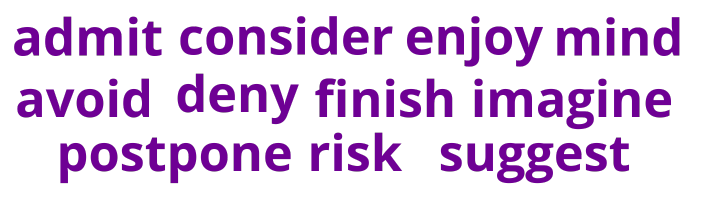
    admit avoid consider deny enjoy finish imagine mind postpone risk suggest


    Examples in context

    I enjoy learning new languages.
    She avoided talking about the problem.
    They finished working late last night.

    In these cases, using to would be incorrect. Therefore, memorizing this group is very important.


    Verbs That Are Followed by to + Verb

    On the other hand, many verbs are naturally followed by to + verb. These verbs often express decisions, plans, intentions, or future actions.

    Some common verbs in this group are:
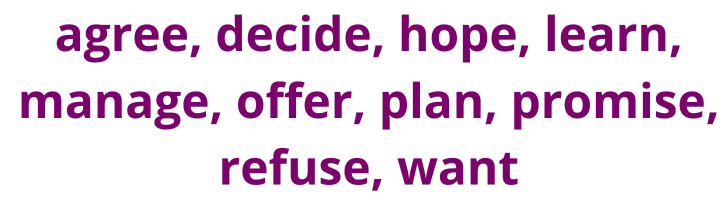
    agree, decide, hope, learn, manage, offer, plan, promise, refuse, want


    Examples in context

    I decided to study English seriously.
    She hopes to travel abroad next year.
    They refused to accept the offer.

    As you can see, these verbs focus more on intention than on the action itself.


    Verbs That Change Meaning: -ing vs to

    Now comes the most important part. Some verbs can be followed by -ing or to, but the meaning changes depending on the structure.

    Remember

    Remember + -ing refers to a memory of something you already did.

    I remember locking the door.
    This means the action happened, and now you remember it.

    Remember + to refers to something you must do.

    Remember to lock the door.
    In this case, it is a reminder, not a memory.


    Regret

    Regret + -ing is used when you feel sorry about a past action.

    I regret saying that.

    Regret + to is often used in formal situations to introduce bad news.

    We regret to inform you that your application was unsuccessful.


    Go on

    Go on + -ing means to continue the same action.

    He went on talking even after the meeting ended.

    Go on + to means to change to a new action.

    She finished her degree and went on to work abroad.


    Verbs With Little or No Change in Meaning

    In some situations, both structures are possible with little difference in meaning. This usually happens with verbs related to starting or continuing actions.

    Common examples include:

    begin
    start
    continue
    intend
    bother

    It started raining.
    It started to rain.

    Both sentences are correct and commonly used.

    However, it is worth noting that we usually avoid -ing after -ing. For example, we say:

    It’s starting to rain.
    Not usually: It’s starting raining.


    Try: Effort vs Experiment

    The verb try is another excellent example of meaning change.

    Try + to means making an effort.

    I tried to open the door, but it was locked.

    Try + -ing means experimenting to see what happens.

    Try restarting the computer.

    In this case, the action is a suggestion, not a struggle.


    Need: Active or Passive Meaning

    Finally, the verb need can be used in two different ways.

    Need + to means obligation.

    I need to charge my phone.

    Need + -ing has a passive meaning.

    My phone needs charging.
    This means: My phone needs to be charged.


    Like, Love, Hate, and Would Like

    When talking about general preferences, both structures are possible.

    I like reading before bed.
    I like to read before bed.

    However, there is a small difference in meaning.

    Like + -ing focuses on enjoyment.
    Like + to focuses on habit or choice.

    On the other hand, would like, would love, and would hate are always followed by to.

    I’d like to travel more.
    I’d love to meet you someday.


    Final Thoughts

    In conclusion, choosing between verb + -ing and verb + to is not random. Instead, it depends on the main verb and, in many cases, on the meaning you want to express.

    Once you understand these patterns, your English becomes clearer, more natural, and much more confident.

    Most importantly, learning these structures helps you avoid common mistakes and communicate exactly what you mean.
    What is the difference between verb + -ing and verb + to

    Frequently Asked Questions (FAQ)


    1. What is the difference between verb + -ing and verb + to?

    The difference depends on the main verb. Some verbs are followed only by -ing, others only by to + verb, and some can use both forms with a change in meaning. Understanding this difference helps you speak more naturally and avoid common mistakes.


    2. When should I use verb + -ing in English?

    You should use verb + -ing after certain verbs such as enjoy, avoid, finish, consider, and suggest. It is also commonly used when talking about activities, experiences, or actions in progress.


    3. When should I use verb + to?

    Use to + verb after verbs like want, decide, hope, plan, and promise. This structure is usually connected to intentions, decisions, or future actions.


    4. Why does the meaning change with remember doing and remember to do?

    Remember doing refers to a memory of a past action.
    Remember to do refers to something you must do in the future.
    This difference is very common and often causes confusion for learners.


    5. What is the difference between try to do and try doing?

    Try to do means making an effort to do something difficult.
    Try doing means experimenting to see what happens.
    Both structures are correct, but the meaning is different.


    6. Is there a difference between start doing and start to do?

    In most cases, there is little or no difference. However, English speakers usually prefer start to when the verb is already in the -ing form, such as It’s starting to rain.


    7. Can like be followed by both -ing and to?

    Yes. Like + -ing focuses on enjoyment, while like + to focuses on habits or choices. Both are correct, but they express slightly different ideas.


    8. Why do we say “needs cleaning” instead of “needs to be cleaned”?

    Needs + -ing is a common structure in English with a passive meaning.
    For example, The house needs cleaning means The house needs to be cleaned.


    9. Is verb + -ing more common than verb + to?

    Both forms are very common. The correct choice depends on the verb and the meaning you want to express, not on frequency alone.


    10. How can I stop making mistakes with -ing and to?

    The best way is to learn verbs in groups, understand meaning differences, and practice with real examples instead of memorizing isolated rules.

    English Immersion Grammar Tricky English
    Share. Facebook Twitter Pinterest LinkedIn Tumblr WhatsApp Email
    Previous ArticleWhy Do the British Say First Floor and Americans Say Second Floor?
    Next Article What’s the diference between in time and on time?
    wilfordfluency
    • Website

    Related Posts

    What’s the Difference Between Storey and Floor?

    14 de January de 2026

    What’s the Difference Between City and Town?

    13 de January de 2026

    What’s the Difference Between Teacher and Professor?

    12 de January de 2026

    What’s the Difference Between Borrow and Lend?

    12 de January de 2026
    Leave A Reply Cancel Reply

    Recommendations

    Present Perfect vs Past Simple: Understand the Difference and Avoid Common Mistakes

    14 de December de 2025

    When to Use Neither, Either, Nor and Or: Guia Completo para Estudantes de Inglês

    11 de December de 2025
    More tips
    Grammar

    What’s the Difference Between Storey and Floor?

    By wilfordfluency14 de January de 20260

    What’s the Difference Between Storey and Floor? The words storey and floor are closely related,…

    What’s the Difference Between City and Town?

    13 de January de 2026

    What’s the Difference Between Teacher and Professor?

    12 de January de 2026

    What’s the Difference Between Borrow and Lend?

    12 de January de 2026
    About me
    About me

    Wilford Fluency é um site educacional criado por Márcio Wilford, professor de inglês com mais de 10 anos de experiência no ensino do idioma, focado no uso prático e real da língua inglesa.

    Recommendations

    Present Perfect vs Past Simple: Understand the Difference and Avoid Common Mistakes

    14 de December de 2025

    When to Use Neither, Either, Nor and Or: Guia Completo para Estudantes de Inglês

    11 de December de 2025
    New Comments
    • wilfordfluency on Take it easy: significado, uso e exemplos em inglês
    • Home
    • Expressions
    • English for Travel
    • Tricky English
    • Contact
    • About me
    © 2026 Wilford Fluency. Todos os direitos reservados | Política de Privacidade

    Type above and press Enter to search. Press Esc to cancel.

    Manage Consent
    To provide the best experiences, we use technologies like cookies to store and/or access device information. Consenting to these technologies will allow us to process data such as browsing behavior or unique IDs on this site. Not consenting or withdrawing consent, may adversely affect certain features and functions.
    Functional Always active
    The technical storage or access is strictly necessary for the legitimate purpose of enabling the use of a specific service explicitly requested by the subscriber or user, or for the sole purpose of carrying out the transmission of a communication over an electronic communications network.
    Preferences
    The technical storage or access is necessary for the legitimate purpose of storing preferences that are not requested by the subscriber or user.
    Statistics
    The technical storage or access that is used exclusively for statistical purposes. The technical storage or access that is used exclusively for anonymous statistical purposes. Without a subpoena, voluntary compliance on the part of your Internet Service Provider, or additional records from a third party, information stored or retrieved for this purpose alone cannot usually be used to identify you.
    Marketing
    The technical storage or access is required to create user profiles to send advertising, or to track the user on a website or across several websites for similar marketing purposes.
    • Manage options
    • Manage services
    • Manage {vendor_count} vendors
    • Read more about these purposes
    View preferences
    • {title}
    • {title}
    • {title}
    Ad Blocker Enabled! 😢
    Ad Blocker Enabled! 😢
    We understand ads can be annoying 😕 Still, they help us keep teaching English for free 🙏📚 Please consider disabling your ad blocker to help keep this content free.

    Sign In or Register

    Welcome Back!

    Login to your account below.

    Lost password?